| |
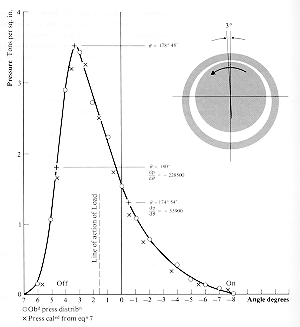
The pressure
distribution of lubricant within a journal bearing, shown opposite, was
measured by Stanton in 1923 and helped to firmly establish the hydrodynamic
model of lubrication that had been initiated by Reynolds.
A pressure
sensor and thermocouple were contained in the outer wall of the bearing. By
rotating this wall to different angular positions the same measuring equipment
determined these two parameters as a function of angular position referenced
to the vertical center line of the bearing (0 degrees). The shaft rotated
counterclockwise at 1000 rpm and it is seen that the pressure maximum (54 MPa)
occurs on the output side of the lubricating wedge formed between the shaft
and the shell. The angular range of the positive pressure distribution indicates
that the load is being carried by segment of the bearing only 150
in width, the rest of the shell acting as a reservoir for the lubricant.
Measuring the temperature (49.4 C) as well as the pressure of the lubricant
is very important as the viscosity of the liquid is a strong function of
temperature. |
|
|
|
|
|
|
|
|
|
|
|
|