| |
|
Friction
between the chain and the gears needs to be minimized to reduce the energy
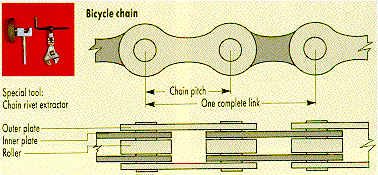
losses in this part of the transmission. The diagram indicates the inner and
outer plate construction of a low friction roller chain. The roller rides
on the pins connecting the plates on either side of the chain. Friction between
the rollers and the gear teeth causes them to rotate rather than slide
and thus energy losses are reduced. This chain type is used on most modern bikes. The movement of the side
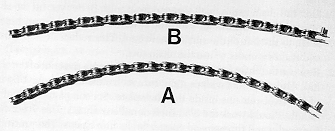
plates with respect to the pins causes wear that shows up in the transverse
sag of the chain that is illustrated in the photograph. Chain A is an old
chain with pin/plate wear and is compared to a new chain, B. The nominal length
of a complete link in a chain is 1 inch with a chain pitch of half an inch.
As the chain wears, the effective length of the link increases. Chain
A has worn enough that replacement is appropriate. Chain length is altered
by adding or removing links. Adjustment of the rear wheel location is used
to provide correct chain tension for the fixed or epicyclic gear box rear hub.
|
| |
|
|
From:
Apps, "The Bicycle Book," Smithmark (1993);
and Sloane, "Sloane's
Complete Book of Bicycling," Simon & Schuster (1995) |
|
|
|
|
|