 |
|
|
|
|
|
|
|
|
|
|
|
|
||||
|
|
|
||||||||||||||
| Failure Mechanisms | ||||||||||||||||
| ·
The
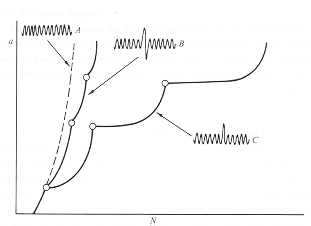
crack propagation behavior is also dependent on the order in which tensile
and compressive overloads are experienced. This is illustrated for some
simple situations.
· Curve A shows the crack growth expected for a constant stress amplitude test with zero mean stress. · In curve B a tensile-compressive overload pulse is applied between each set of constant amplitude cycles. Crack tip re-sharpening occurs during the compression overload |
||||||||||||||||
 |
||||||||||||||||
| From:
Suresh, "Fatigue of Materials,"
Cambridge (1991) |
||||||||||||||||
| and
the prior crack behaves like a notch for the next sequence.
· If only a tensile overload is applied (C) the crack remains blunt and the decrease in local stress can retard crack propagation. Crack resharpening takes many cycles, and there is a delay before (da/dN) reaches its previous value. This happens for each application of a tensile overload. |
||||||||||||||||